Block Wall Installation in Tustin, California
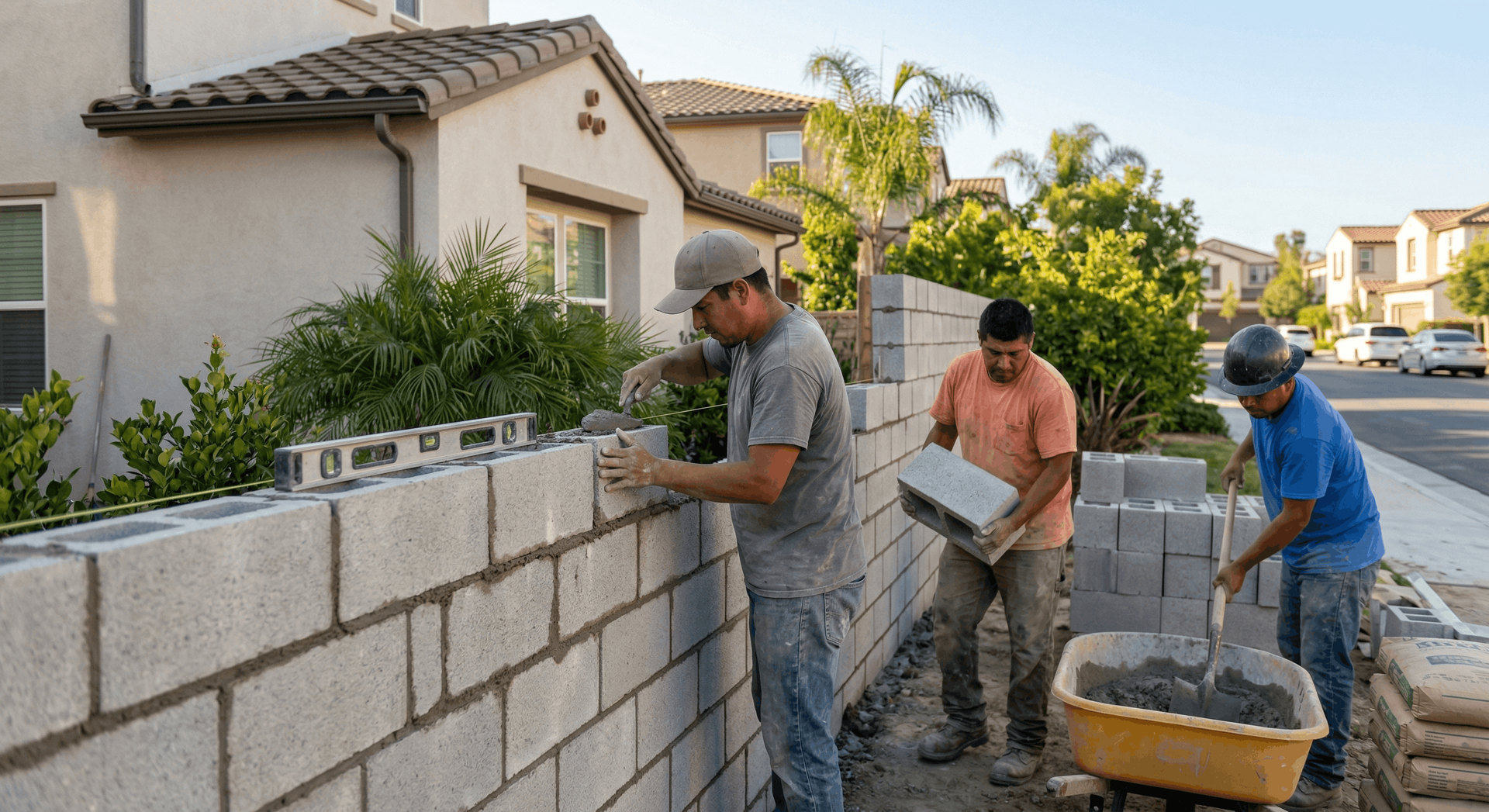
We provide block wall installation in Tustin, CA for homeowners who want more privacy, a cleaner yard line, stronger security, and a structure that actually holds up. At Tustin Block & Retaining Walls, we build new masonry structures for front yards, side yards, backyards, rentals, and corner lots, and we do it with the kind of prep work that helps the enclosure stay straight, solid, and good-looking for years.

Contact Us
A good CMU structure does more than mark a property line. It gives your yard shape. It cuts down on noise. It adds a layer of safety for kids and pets. It makes a home feel finished. Around Tustin, that matters a lot. You see it in older neighborhoods near Old Town Tustin, in family homes closer to Tustin Ranch, and in places where a wood fence just doesn’t fit the look or the upkeep. We’ve worked on masonry features that needed to match an existing stucco finish, structures built for plain function, and enclosures that had to solve two jobs at once, like privacy and slope control. Every yard tells a different story.
What We Cover:
- Segmental Retaining Walls
- Concrete Block Walls
- Cinder Block Privacy Walls
- Retaining Wall Repair
- Garden & Decorative Walls
- Hillside & Slope Stabilization
- Design & Permit Consultation
- What Block Wall Installation Includes
- Why Homeowners in Tustin Install CMU Walls
- When You Need a New Block Wall
- Why Block Walls Fail
- Our Installation Process
What Block Wall Installation Includes
We build a masonry feature from the ground up using concrete blocks, proper footing work, steel reinforcement, mortar, and a layout that fits the lot. That sounds simple on paper. It rarely is. The enclosure has to sit where it should sit. It has to meet height rules. It has to work with gates, drainage, driveways, walkways, and nearby structures. A barrier that looks straight from the street can still fail early if the footing is weak or the soil shifts under it.
Here’s the thing: the part you don’t see is often the part that matters most. The digging, the footing depth, the steel placement, the way the first course gets set, the way the divider ties into columns or returns, all of that decides whether the perimeter lasts or starts cracking sooner than it should.
We build masonry features for common needs like backyard privacy walls, side yard divider walls, front yard enclosures, replacement perimeter structures, and blockwork that support gates or screen off equipment areas. Some owners want a clean, plain gray blockwork. Some want split-face block for more texture. Some want a smooth stucco finish so the section feels like it belongs with the house. We can build around that goal from the start, not tack it on as an afterthought.
Why Homeowners in Tustin Install CMU Walls
A lot of people call us once an old fence starts leaning, rotting, or falling apart board by board. Others are done sharing too much space with the lot next door. Privacy is a big reason. Security is another. Noise control comes up more than people expect, especially near busier roads or homes with close lot lines. And then there’s curb appeal, which sounds a little fluffy until you see the change a well-built barrier makes out front.
Look, masonry perimeters gives a property a settled feel. It’s like putting a proper frame around a picture instead of taping the corners and hoping nobody notices. The yard feels clearer. The edges make sense. The whole place reads better.
We also hear from homeowners who’ve had storm damage, vehicle impact, tree-root pressure, or long-term wear on an old perimeter. In parts of Orange County, you’ll see aging structures that were built decades ago and never had the best footing to begin with. Time catches up. Soil shifts. Irrigation leaks. Little cracks turn into stair-step cracking, then movement, then sections that lean enough to make people nervous.
When You Need a New Block Wall
You need masonry installation when there is no structure at all and the property needs one. You need it when an old fence no longer makes sense. You need it when an existing wall has reached the point where patching it won’t fix the real problem.
Some signs are obvious. The old barrier leans. Large cracks keep opening back up. Sections are loose. The base has broken apart. A car hit one end and the damage runs farther than it looks. Other signs are quieter. The property feels exposed. You hear more street noise than you should. You’re tired of repainting or replacing wood. You want a stronger line between your home and the next lot.
What about a structure that only has a few cracks? That’s a fair question.
Small cracks don’t always mean full replacement. They do tell you to look closer. A masontry feature with isolated cosmetic cracks may still be sound. An enclosure with repeated cracking, visible shift, failing footing, or broad damage usually needs more than surface patching. We inspect that difference carefully so the work matches the real condition, not just the first thing visible from ten feet away.
Why Block Walls Fail
They fail for a few plain reasons. Weak footing is one. Poor drainage is another. Soil movement matters a lot in Southern California, especially where moisture levels swing or where nearby grading sends water toward the structure. Tree roots can push from one side. Cars can strike a corner post and throw the line out. Poor workmanship causes plenty of trouble too. A perimeter built too fast, with weak mortar joints or poor reinforcement, often tells on itself within a few seasons.
The other day we drove past a divider with a beautiful finish and a bad lean. It looked polished from the street. Up close, the clues were all there. Hairline cracking near the joints, a slight bow through the middle, and staining near the base from trapped moisture. That’s the kind of enclosure that reminds people why surface looks alone can fool you.
A structurye doesn’t have to collapse to be a problem. Once it starts moving, the pressure keeps working on it. That can affect gates, adjoining sections, corners, and even nearby hardscape. A bad masonry feature can turn into a bigger project than the owner planned for, which is why good installation matters so much on day one.
FAQs About Block Wall Installation in Tustin, CA
How long does a CMU structure last?
A well-built perimeter can last for decades. Lifespan depends on footing strength, soil movement, water exposure, impact damage, and build quality. A structure with proper reinforcement and drainage will outlast one that was rushed or built on weak prep.
Is a concrete perimeter installation better than a wood fence for privacy?
For many homes, yes. A CMU perimeter gives more solid privacy, more security, and less routine upkeep than wood. It also handles age and weather better. Owners who plan to stay in the home for years often prefer the long-term value of masonry.
Can you match an existing perimeter on my property?
Yes, in many cases we can match the style, height, texture, and finish closely. Exact matches depend on the age of the existing wall and the materials still available, but we aim for a consistent look so the new section doesn’t feel patched in or out of place.
Do I need a new wall if mine is leaning?
A leaning enclosure needs close inspection. Minor movement in one small section may allow for a targeted repair. A stronger lean, wide cracking, or base failure usually points to replacement. Once the structure starts shifting, surface fixes won’t stop the underlying issue.
Can a masonry installation help with noise and security?
Yes. A solid masonry feature can reduce sound better than many lighter fence types, and it adds a stronger barrier around the property. It won’t make a yard silent, of course, but it often makes a noticeable difference near nearby streets and neighboring activity.
What Good Installation Changes
Good installation gives you a surface that stands straight, drains the way it should, and fits the property instead of fighting it. We pay close attention to layout, grade, footing work, reinforcement, and finish details. That’s not glamour work. It is the work that keeps a section from becoming next year’s repair call.
We think through the job in homeowner terms. Will the masonry feature line up cleanly with the gate? Will the finish work match the home? Will water sit near the base? Will the height make the yard feel boxed in, or private in the right way? That last point matters more than people expect. A perimeter can feel protective, or it can feel harsh. The difference often comes down to proportions, returns, columns, texture, and the way the enclosure meets the rest of the space.
Short version? Build it right once.
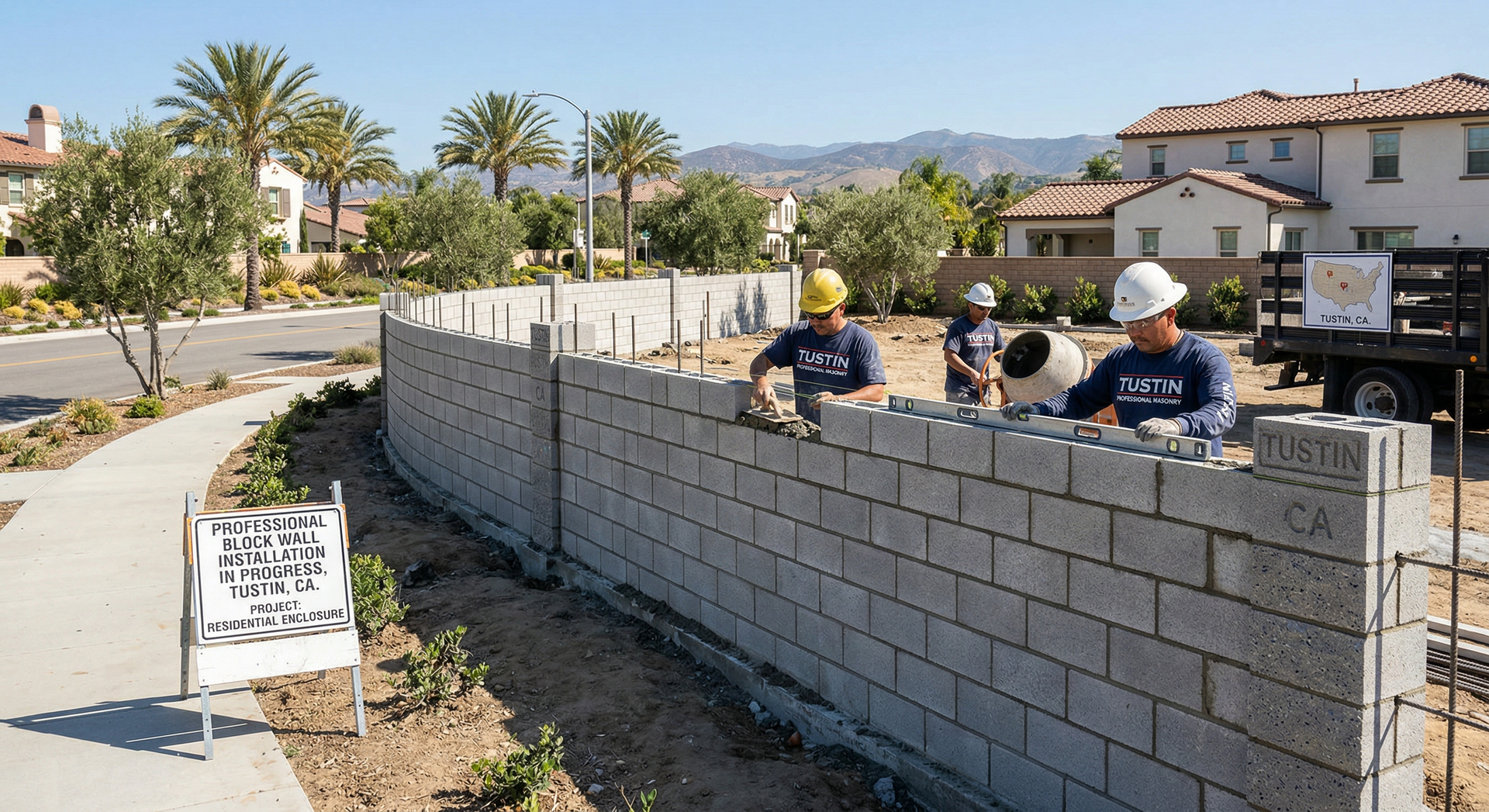
What Affects Installation Cost
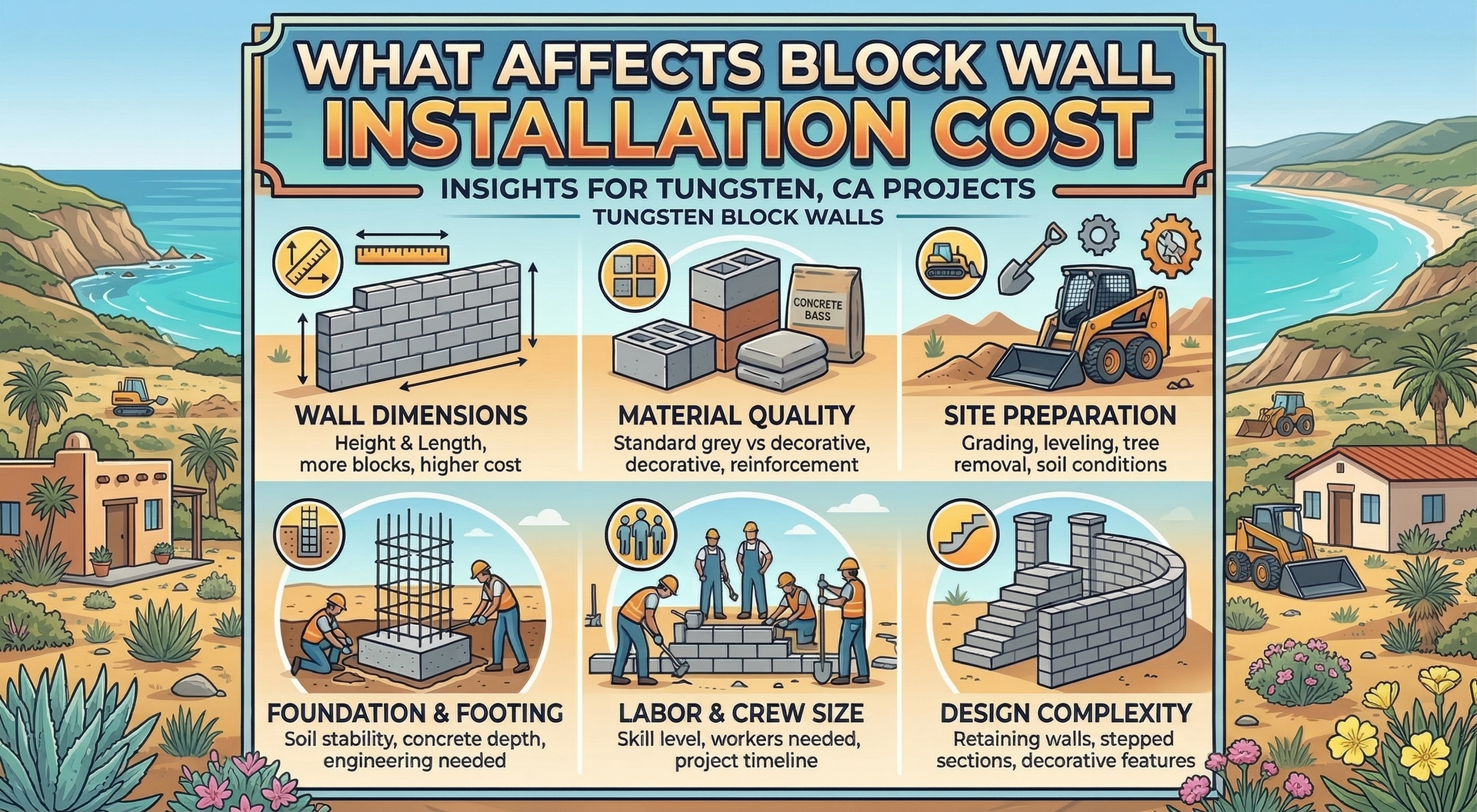
Cost depends on site conditions, height, length, access, finish choices, and how much prep the property needs. A flat, open run along a clean property line is one kind of job. A narrow side yard with old footings, roots, tight access, elevation changes, and tie-ins to existing structures is another. They are not priced the same, and they shouldn’t be.
Finish matters too. Plain cinder block, decorative block, stucco-coated block, pilasters, caps, and custom gate openings all change the scope. Removal of an old divider adds labor and hauling. Permit needs can shape the process. Soil conditions matter more than most people think. Soft or shifting ground changes the footing work, and footing work is where many cheap bids cut corners. That cheap number can feel good for a minute. Then the cracks show up.
We’d rather be direct. A fair price reflects the real work the enclosure needs.
Replacement vs First-Time Installation
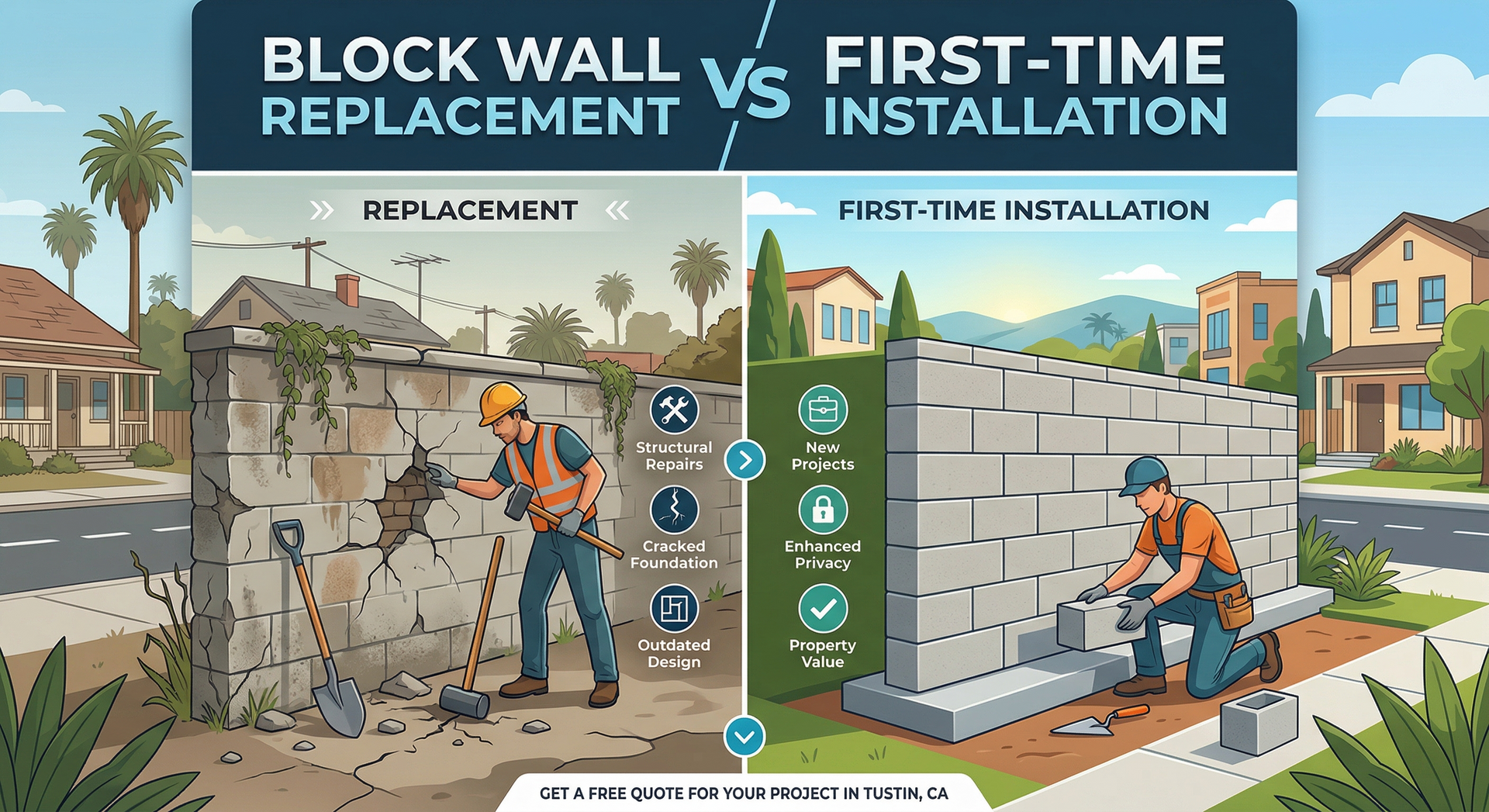
Some homeowners are starting from scratch. Others have an old boundary that has to go before the new one can be built. Those are related jobs, but they aren’t the same thing. First-time installation starts with layout, excavation, footing, and build-out. Replacement work adds demolition, disposal, and often the surprise of uncovering poor old work under the surface.
Can a damaged section just be patched and saved? Yes, sometimes it can.
A localized repair makes sense for limited damage, especially after a small impact or surface issue. Full replacement makes more sense once the surface has broad cracking, visible lean, broken footing sections, or repeated failure in multiple spots. We don’t push replacement for the sake of it. We look at what gives the homeowner a stable result that won’t keep draining money.
Built for Tustin Properties
Tustin homes aren’t all the same. Some lots are older and tighter. Some sit in newer planned areas with cleaner lines and HOA expectations. Some yards need a masonry feature that feels soft enough for a front entry, and some need a firm perimeter line for privacy and security. We build with those differences in mind. A wall near Old Town won’t always read the same as one near Tustin Ranch or close to Irvine edges, and that’s okay. The wall should fit the house, the street, and the way the yard gets used.
We pay attention to the details people live with every day. Gate spacing. Trash can screening. Sight lines from windows. The way a structure changes the feel of a patio. The way a side-yard perimeter affects airflow and access. Those details aren’t filler. They’re the stuff that makes the finished job feel right once you’re the one walking past it every morning.
Our Installation Process
We start by looking at the property and the goal. Some owners want full privacy. Some need a property line divider that replaces a failing one. Some want a front barrier with a more finished look. We talk through use, placement, finish, and any problem areas first. Then we map out the section line, prep the site, install the footing work, set the concrete, reinforce the structure, and finish the structure to match the job.
We keep the process clear. We don’t bury you in trade talk. We explain what matters, what the perimeter needs, and what to expect at each stage. That part matters. Homeowners deserve to know what’s happening on their property and why.
Get a Masonry Structure that Feels Solid From Day One
An enclosure should do its job quietly. It should look clean, stand straight, and make the property feel more private, more secure, and more complete. That’s what we build. If you’re planning CMU wall installation in Tustin, CA, contact us and let’s talk about the kind of blockwork your property actually needs.
Ready to transform your sloped yard into a stunning, functional space? Call (657) 553-3314 for a fast, free estimate.